
KandySri Lanka
Sri Lanka’s bustling commercial capital Colombo is the country’s busy business hub.
KandySri Lanka
Sri Lanka’s bustling commercial capital Colombo is the country’s busy business hub.
About Kandy
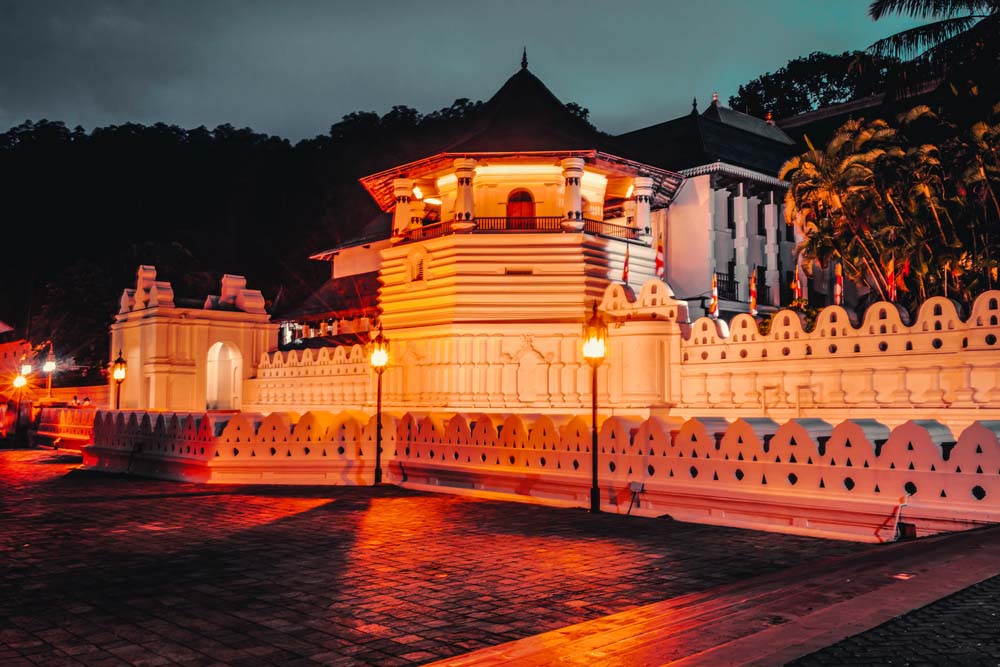
The once impenetrable Kingdom of Kandy is home to the famous Temple of the Tooth and a lush 60-hectare Botanical garden. Full of ancient legends, cultural treasures and festivals Kandy can also be cozy and quiet. The drive offers stunning views of the hill country. A UNESCO World Heritage City, Kandy is the historic and romantic hill capital of Sri Lanka, situated 116 kilometres inland from Colombo. The road to Kandy is enchanting and exciting revealing the full glory of the tropics. The roads run round in sharp curves and looking down will offer a view of deep valleys, abysses, rocks, waterfalls and streams glittering in the sun and patterned in emerald with terraced rice fields. On the other side, the mountains rise majestically against the blue sky. Whether one looks up or down, it’s a sight of beauty, glorious beyond the power of words to explain. Margaret Mordecai, the author of the book ‘Indian Dreamlands’ described Kandy as ‘The Most beautiful Spot in the British Empire’. Nature has Indeed contributed towards it and so has the culture. Kandy was founded as the city of Royal Residence by King Vickramabahu in the late 14th Century and was the last strong hold of Sinhala rulers of the late medieval time until it came under British rule in 1815 when Sri Lanka became a full British colony. The last King of Sri Lanka and Kandy was King Sri Wickrama Rajasinghe, who ruled from 1798 – 1815 AD. Now transformed into a modern commercialised city as the capital of the Central Province with many monuments of the past, Kandy is now a thrilling mixture of new and old. The city holds a diversity of attractions with the preservation of certain important aspects of performing arts, religious practices of a bygone civilisation, and a dynamic new present with a tradition-bound past. The greatest attraction of the city is the Temple of the Sacred Tooth Relic of Buddha or Dalada Maligawa. It is one of the most sacred places for Buddhists all over the world. It is famous for its Sinhalese style architecture and is visited by thousands of devotees every day. Ancient cultural rituals and ceremonies started in the 4th Century are still being performed here daily with great devotion. Beating of drums, early in the morning and in the evening is one routine of this ritual experienced by many visitors to this sacred place. The well preserved buildings of the palace complex are living treasures and are presently being used for various different purposes. These historical buildings are preserved in the original form and could be visited by interested parties. The King’s Palace, Raja Wasala is presently used as the Museum of the Department of Archeology. The Council Chamber, popularly known as the Magul Maduwa is located to the left of the King’s Palace and is an excellent example of timber architecture of the Kandyan period. The Queens Bath, Ulpange, later converted to a library by the British, the King’s Harem, Palle Wasala presently the National Miseum of Kandy, the Queens’ Chambers, Meda Wasla and the Royal Armoury the former District Courts of Kandy are prominent historic buildings with great character. The many historic Buddhist Temples located in and around Kandy have also become famous attractions to both local and foreign visitors to Kandy. The famous temples, Gadaladeniya Vihare, Lankathilaka Vihare, Hindagala Vihare, Gangarama Vihare, Degaldoruwa Vihare and Embekke Devalaya have gained much importance and popularity due to their art work, architecture and the association they had with the Kandyan Kingdom.
Recommended Hotels in Kandy
You can get a idea about some hotels.
